
Administering local anaesthesia to a patient is a science and an art. The “science” lies in understanding the different types of anaesthetics available, their composition, their action, and their application.
The “art” is to choose wisely and master the one procedure that precedes clinical dentistry which could make or break your practice.
How do patients judge the skills of their dentist? What gives them confidence?
Their experience, how they feel and most often from the way they get an injection.
Equally, studies have shown that when a painful response to an injection is elicited, the dentist undergoes a great deal of stress. We have seen some of us break into a sweat!
What we need to know:
- Current products
- The physiology of pain
- Patient’s fears
- Proper selection and proven technique
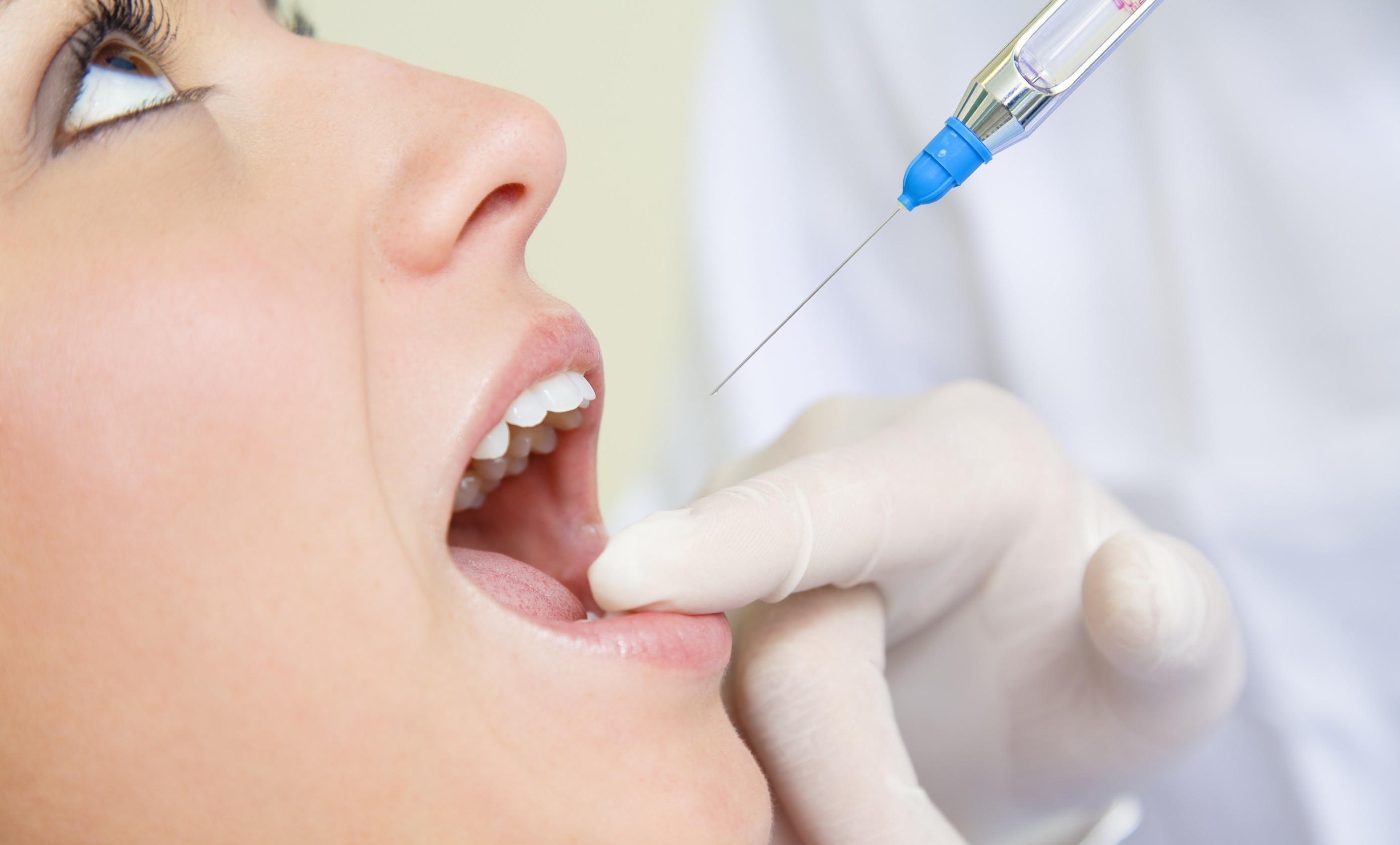
80% of patients have a dread of the needle. It is advisable to avoid making them wait for a long time before the procedure as this will only increase their anxiety. Prior to starting, a review of history and current medication could prove useful. It is necessary to use a topical anaesthetic before injection. These are available in gel, liquid, ointment or pressurized forms. The most common ones are those containing benzocaine or lidocaine.
Gels are used for effective pain relief and to alleviate pain at the point of injection of the local anaesthetic.
To apply the topical:
Retract the tissue, identify the area and wipe dry with gauze to remove saliva. Carry the gel on a cotton bud and rub for 30- 60 seconds. Inject local anaesthetic within 2 minutes, all the time keeping the tissue away from the site and then wash off the gel.
The needle should ideally be a triple bevel design for minimal tear to the tissue. The scalpel bevel is also a good choice.
Injecting Information:
- Inject in a straight line
- Do not bend the needle as there is a risk of breakage.
- Smaller gauges break easily.
25-27 gauge needles are ideal for infiltrations or nerve blocks.
- Do not bury the needle to the hub.
5. Inject slowly, with good control. The rapid injection causes ballooning and stretching of the tissue, causing pain.
- Pay attention to the direction of the needle. For example, an infiltration for the upper anterior teeth could end up with a swollen lip or a numb nose. A misdirected mandibular block can also benumb the ear lobes.
During the procedure use ‘The Gate Control’ theory to distract the patient.
The Gate Control theory asserts that a non- painful input (pressure/vibration) closes the nerve gates to a painful input (needle prick) which prevents the pain sensation from travelling to the central nervous system.
Tapping the shoulder or stretching the cheek or jiggling lip tissue are methods commonly used.
For palatal injections, topical anaesthesia does not work so well due to thick, immovable tissue. Always infiltrate on the buccal side first and then move to the palatal. A sliver of ice can be applied to briefly numb the area, or the back end of a mouth mirror could be used to compress the mucosa and the needle inserted alongside the instrument slowly.
When dealing with an infected site:
- Ideally, wait for the active infection and accompanying swelling and pain to subside with covering antibiotics and then perform the procedure.
- Try infiltrating directly into the periodontal ligament, intraosseously and around the crest surrounding a periodontally compromised mobile tooth needing extraction.
- Select a more protein-bound anaesthetic with a less acidic pKa value (this value indicates the strength of the acid). Articaine, with a pKa value of 7.8 can work effectively.
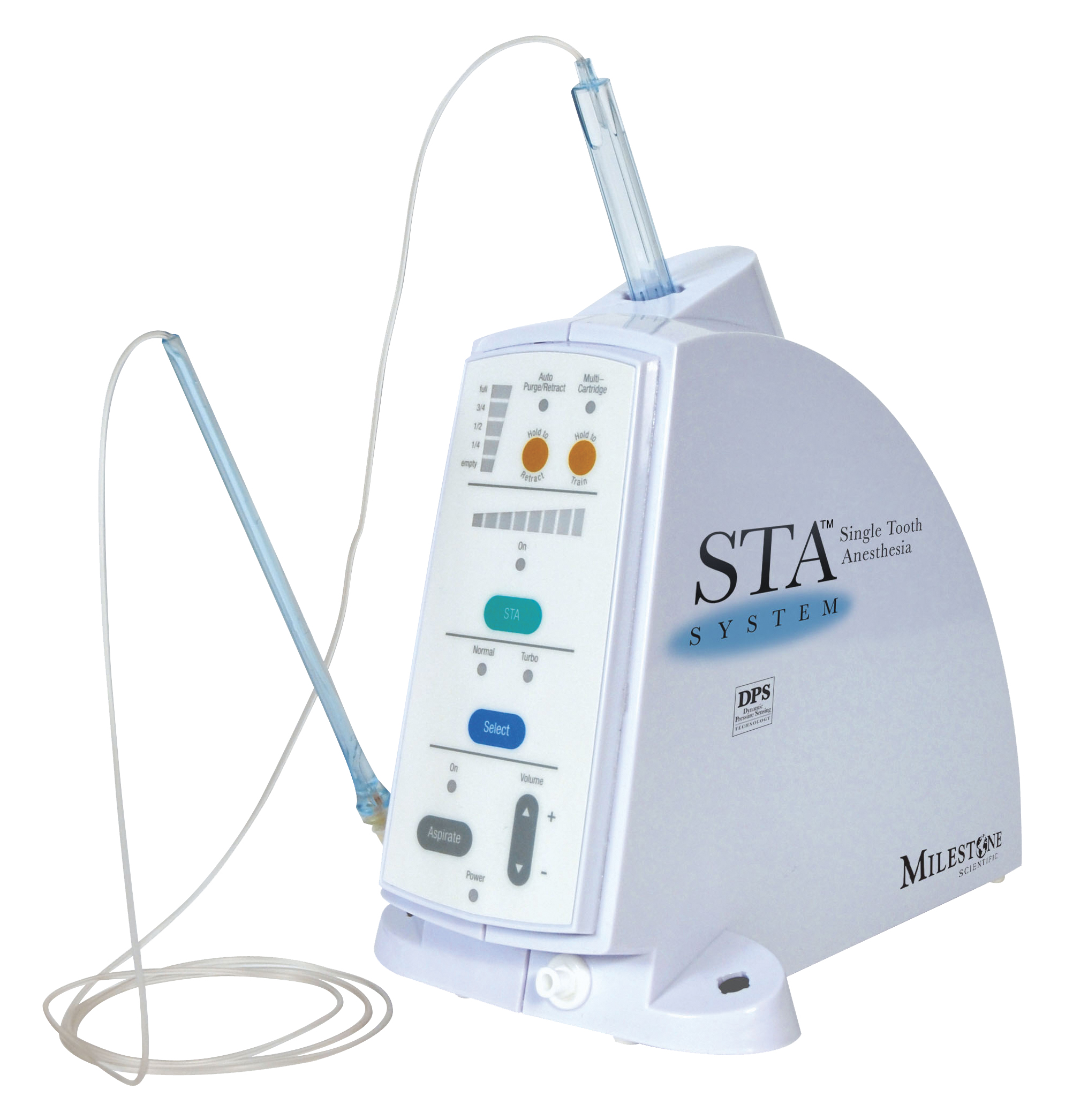
- The STA Wand or any computerised local anaesthesia injection system is worth considering, as it provides visual and audio feedback. It can effectively anaesthetise a section or a single tooth with minimal discomfort using an intraligamentary technique.
When you fail to achieve anaesthesia and are forced to abandon the procedure and reschedule:
- Consider the anatomy carefully at the site of needle penetration.
- Ensure patient is adequately rested from the previous night.
- Prescribe an anti-anxiolytic an hour before the procedure.
- A calm and reassuring manner by the dentist will help the patient relax.
- Treat the patient under conscious sedation.
In the final analysis, the successful administration of a painless and effective injection is a mixture of the approach, confidence and in-depth knowledge of the drug by the operator. This is a unique skill that can be fine-tuned by the experience gained from every injection given in the course of practice.
The signal sent to your patient is unmistakable. You are in control, there will be no pain, and it will work!
-Dr. Vijailakshmi Acharya