
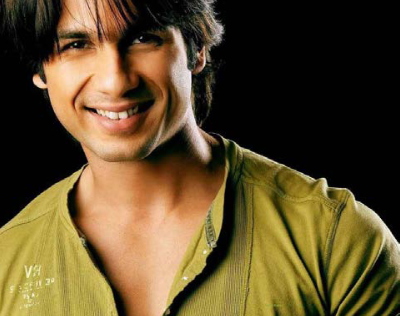
Somewhere along the way, I began to wonder if the real skill in sculpting smiles was not in how much I could change – but in knowing when not to.
There was a point in my journey when it was no longer about how much more could be done, how much brighter or more symmetrical a smile could become. I had learned the rules, understood the science and somewhere along the way found myself wondering when and how, to step away. For a long time, like many of us, I was guided by the pursuit of perfection. We are trained to see beauty in alignment, in symmetry, in flawless execution and our patients often arrive with similar expectations – shaped by what they see and believe a “perfect smile” should look like.
And yet, over time, I found myself noticing something else. Some of the most attractive smiles I encountered were not perfect. They carried a certain softness – a play of light across surfaces that weren’t entirely uniform, incisal edges that varied slightly, translucencies that shifted from one tooth to the next. These small irregularities, once things I might have corrected, began to feel like the very elements that made a smile alive. This realization didn’t arrive as a theory; it unfolded gradually – often in the operatory – when a technically flawless case felt slightly artificial and another, less “perfect” one felt completely right. That contrast stayed with me.
The idea that less might be more came not from instruction but from experience. From cases that looked impressive on the day they were completed but felt excessive in retrospect. From moments of quiet reflection – wondering if I had done more than was truly necessary. One case, in particular, has stayed with me. In an effort to be conservative, I chose veneers where a full coverage restoration might have offered greater long-term stability. At the time, it felt like the right decision – minimal intervention, preservation of structure. But over time, the limitations became evident. It made me reconsider what I had come to understand as “conservative,” and whether I had been thinking about it in too narrow a way.
Restraint or holding back, I have come to feel, isn’t something that can be easily taught. It develops slowly and it asks for a certain kind of confidence – because doing less can feel counterintuitive in a field where visible transformation is often equated with success. And yet, the most satisfying work, at least to me now, often doesn’t announce itself. It settles into the individual. It feels as though it belongs.
Why would I want to change this smile?
We need to create something that appears untouched and intervene with precision. To achieve naturalness, we often have to resist the instinct to standardize. The temptation to make everything uniform – to align, polish and perfect- is strong. It feels controlled. And yet, it is often this very uniformity that can take something away. Nature is rarely repetitive. It thrives on variation – subtle changes in contour, texture, translucency. As I began to pay closer attention to these nuances and incorporate them more deliberately, the work started to feel less constructed and more intuitive.
With time comes an awareness of how often teeth may have been overtreated in the name of aesthetics. At times, even vital teeth are electively aendodontically treated – not out of necessity but to accommodate restorative demands or to pre-empt potential post-operative sensitivity. In the moment, it can feel like a practical decision. In hindsight, it often raises quieter questions about whether we crossed a line in pursuit of an ideal. Endodontically treated teeth that began as elective interventions, crowns that replaced structure that might have been preserved, veneers that felt conservative then but invite reflection now – these are not uncommon.
Certain cases stay with you – not because they went wrong but because they make you rethink. They nudge you to ask: what does it really mean to be conservative? For a long time, I associated conservatism with minimal preparation and often that holds true. But not always. There are situations where doing less may compromise longevity, leading to more intervention over time. In those moments, conservatism seems to take on a different meaning – not how little we remove but how thoughtfully the treatment serves the patient over time. Holding that balance is not always straightforward. It asks us to sit with a certain uncertainty – to accept that doing less is often better but not always right.
Our work is uniquely visible. Every smile becomes part of a person’s daily life – their expressions, their conversations, their confidence. There is something deeply rewarding about that but it also means our decisions stay with us. Over time, this awareness seems to slow things down – in a way that feels necessary. It encourages us to look more carefully, to listen more closely. Because patients rarely speak in technical terms. They speak of how they feel when they smile, or when they don’t – of photographs they avoid, of moments of self consciousness. These are not just dental concerns; they are human ones.
And somewhere in that space, our role begins to feel less like correcting and more like interpreting – understanding what is being expressed and responding in a way that feels aligned with the individual. There is no single ideal smile. What suits one person may not suit another. Age, personality and expectation all shape what feels appropriate. Perhaps the goal is not to impose an ideal but to reveal something that already belongs.
There is a quiet satisfaction in creating a result that does not draw attention to itself – a smile that feels as though it has always been there, a change that is noticed but not easily identified. That, perhaps, is the space I find myself drawn to now. Not as a destination but as something I am still learning to understand.
And maybe that is what makes this journey so compelling – that just when we feel we know what to do, we are reminded to pause, to question and to look again. The most beautiful smiles may not come from adding more. But I’m still learning what it truly means to know when to stop.
I wonder if the reader has also faced these dilemmas. If you have done the numbers you must have agonised as well.
The search for the perfect balance is still on…
-Dr.Vijailakshmi Acharya